|
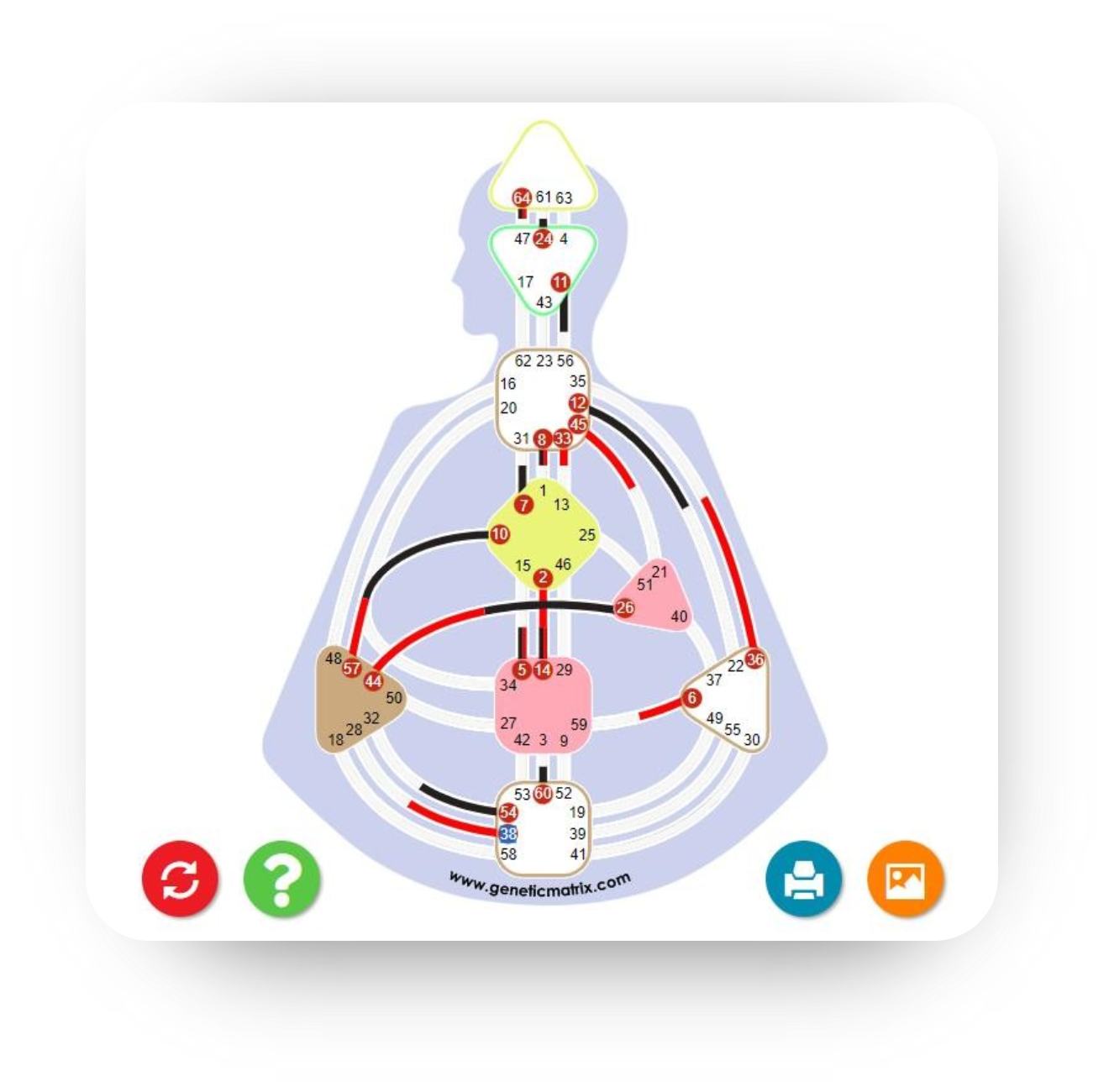
John Sidney McCain III (born August 29, 1936) is the senior United States
Senator from Arizona and a candidate for the Republican Party nomination in the
2008 presidential election.
Both McCain's grandfather and father were Admirals in the United States Navy.
McCain also attended the United States Naval Academy and finished near the bottom
of his graduating class in 1958. McCain became a naval aviator flying attack
aircraft from carriers. Participating in the Vietnam War, he narrowly escaped death
during the 1967 Forrestal fire. On his twenty-third bombing mission over North
Vietnam later in 1967, he was shot down and badly injured. He became a prisoner of
war. He endured five and a half years of captivity, including periods of torture,
before he was released following the Paris Peace Accords in 1973.
Retiring from the Navy in 1981 and moving to Arizona, McCain soon entered politics.
In 1982 he was elected to the U.S. House of Representatives from Arizona's 1st
congressional district. After serving two terms there, he was elected to the U.S.
Senate from Arizona in 1986. He was subsequently re-elected Senator in 1992, 1998,
and 2004. While generally an adherent to American conservatism, McCain established
a reputation as a political maverick for his willingness to defy Republican
orthodoxy on several issues. Surviving the Keating Five scandal of the 1980s, he
made campaign finance reform one of his signature concerns, which eventually led to
the passing of the McCain-Feingold Act in 2002.
McCain was a candidate in the 2000 presidential election, but was defeated by
George W. Bush for the Republican nomination after closely contested battles in
several early primary states. In the 2008 presidential election, he was the nominal
front-runner as the cycle began, but suffered a near collapse of his campaign in
mid-2007 due to financial issues and his support for comprehensive immigration
reform. He is attempting a comeback as the 2008 primaries begin.
Early life and
military career
McCain was born on August 29, 1936 in Panama at the Coco Solo Air Base in the then
American-controlled Panama Canal Zone to Admiral John S. "Jack" McCain, Jr. and
Roberta (Wright) McCain. Both his father and grandfather were United States Navy
admirals, and were in fact the first father-son pair to both achieve four-star
admiral rank. His grandfather John S. "Slew" McCain, Sr. was a pioneer of aircraft
carrier strategy who commanded all carrier forces in the Pacific Ocean theater of
World War II, led American forces into epic actions such as the Battle of Leyte
Gulf, and died four days after the conclusion of the war. His father was a
submarine commander during World War II who won medals for heroism.
For the first ten years of his life, McCain was frequently uprooted as his family
followed his father to New London, Connecticut, Pearl Harbor, Hawaii and various
other stations in the Pacific Ocean; McCain attended whatever naval base school was
available, often to the detriment to his education. After the attack on Pearl
Harbor in 1941, his father was absent for long stretches. As a child, John was
known for a quick temper and an aggressive drive to compete and prevail. After
World War II was over, his father stayed in the Navy, sometimes working political
liaison posts; the family settled in Northern Virginia, and McCain attended the
educationally stronger St. Stephen's School in Alexandria, Virginia from 1946 to
1949. Another two years was then spent following his father around to naval
stations; altogether he would go to about twenty different schools during his
youth. He then attended Episcopal High School in Alexandria beginning in 1951; it
is a top private school with a rigorous honor code. McCain earned two varsity
letters in wrestling, where he excelled in the lighter weight classes. He had a
continued reputation as a fiery and contentious personality and graduated from high
school in 1954.
Naval
training, early assignments, marriage and family
Following in the footsteps of his father and grandfather, McCain entered the United
States Naval Academy. McCain was a rebellious midshipman and his career at the
Naval Academy was ambivalent and lackluster. He had his share of run-ins with the
faculty and leadership; each year he was given over 100 demerits (for unshined
shoes, formation faults, talking out of place, and the like), earning him
membership in the "Century Club". He did not take well to those of higher rank
arbitrarily wielding power of him — "It was bullshit, and I resented the hell out
of it" — and would sometimes intervene when he saw it being done to others. At 5
foot 7 inches and 127 pounds (1.70 m and 58 kg), he competed as a lightweight boxer
for three years, where he lacked skills but was fearless and "didn't have a reverse
gear." He did well in a few subjects that he was interested in, such as English
literature, history and government. Despite his low standing, he was a leader among
his fellow midshipmen, especially in organizing off-Yard activities; one classmate
said that "being on liberty with John McCain was like being in a train wreck."
Despite his difficulties, he later wrote that he never wavered in his desire to
show his father and family that he was of the same mettle as his naval forbears.
Dropping out was unthinkable and so he successfully completed his training and
graduated from Annapolis in 1958; he was fifth from the bottom in class rank.
Upon his graduation McCain was commissioned an ensign, and spent two and a half
years as a naval aviator in training at Naval Air Station Pensacola in Florida and
Naval Air Station Corpus Christi in Texas, flying A-1 Skyraiders. He earned a
reputation as a party man, as he drove a Corvette, dated an exotic dancer named
"Marie the Flame of Florida", and, as he would later say, "generally misused my
good health and youth." During a practice run in Corpus Christi, his aircraft
crashed into Corpus Christi Bay, though he escaped without major injuries; another
time he emerged intact from a collision with power lines over Spain. He was
graduated from flight school in 1960 and became a naval pilot of attack
aircraft.
McCain was stationed on the aircraft carriers USS Intrepid and USS Enterprise, in
the Caribbean Sea. He was on alert duty on Enterprise when it imposed a blockade
and quarantine of Cuba during the 1962 Cuban Missile Crisis. He then returned to
Pensacola station, where he served as a flight instructor at Naval Air Station
Meridian in Mississippi, whose McCain Field was named for his grandfather. By 1964
he was in a relationship with Carol Shepp, a model originally from Philadelphia,
Pennsylvania; they had known each other at Annapolis and she had married one of his
classmates, but then divorced. On July 3, 1965, McCain married Shepp in
Philadelphia, Pennsylvania. McCain adopted her two children Doug and Andy, who were
five and three years old at the time; he and Carol then had a daughter named Sidney
in September 1966.
McCain grew frustrated with his training role and requested a combat assignment. In
December 1966 McCain was assigned to the aircraft carrier USS Forrestal, flying A-4
Skyhawks; his service there began with tours in the Mediterranean Sea and Atlantic
Ocean. During all this time, McCain's father had risen in the ranks, making rear
admiral in 1958 and vice admiral in 1963;now in May 1967 his father was promoted to
four-star admiral and made Commander-in-Chief, U.S. Naval Forces, Europe, stationed
in London.
Vietnam
operations
In Spring 1967 Forrestal was assigned to join Operation Rolling Thunder, the
bombing campaign against North Vietnam as part of the Vietnam War. The alpha
strikes flown from Forrestal were against specific, pre-selected infrastructure
targets such as arms depots, factories, and bridges; they were quite dangerous due
to the Soviet-designed and supplied anti-aircraft system fielded by the North
Vietnamese Air Defense Force. McCain's first five attack missions over North
Vietnam went without incident, and while still unconcerned with minor Navy
regulations, McCain had by now garnered the reputation of a serious aviator. But
McCain and his fellow pilots were already frustrated by Rolling Thunder's infamous
micromanagement from Washington; he would later write that "The target list was so
restricted that we had to go back and hit the same targets over and over again....
Most of our pilots flying the missions believed that our targets were virtually
worthless. In all candor, we thought our civilian commanders were complete idiots
who didn’t have the least notion of what it took to win the war."
By now a Lieutenant Commander, McCain was again almost killed in action on July 29,
1967 while serving on the Forrestal, operating at Yankee Station in the Gulf of
Tonkin. The crew was preparing to launch attacks when a Zuni rocket from an F-4
Phantom was accidentally fired across the carrier's deck. The rocket struck
McCain's A-4E Skyhawk as the jet was preparing for launch. The impact ruptured the
Skyhawk's fuel tank, which ignited the fuel and knocked two bombs loose. McCain
escaped from his jet by climbing out of the cockpit, working himself to the nose of
the jet, and jumping off its refueling probe onto the burning deck of the aircraft
carrier. Ninety seconds after the impact, one of the bombs exploded underneath his
airplane. McCain was struck in the legs and chest by shrapnel. The ensuing fire
killed 132 sailors, injured 62 others, destroyed at least 20 aircraft, and took 24
hours to control. (This incident, with flight deck video, is still used in U.S.
Navy Recruit Training damage control classes; the video has been made available by
McCain's Presidential Exploratory Committee.) A day or two after the Forrestal
incident, McCain told New York Times reporter R. W. Apple, Jr. in Saigon that,
"It's a difficult thing to say. But now that I've seen what the bombs and the
napalm did to the people on our ship, I'm not so sure that I want to drop any more
of that stuff on North Vietnam." But a change of course was unlikely, as McCain
said, "I always wanted to be in the Navy. I was born into it and I never really
considered another profession. But I always had trouble with the
regimentation."
As Forrestal headed for repairs, McCain volunteered to join the VA-163 Saints on
board the short-staffed USS Oriskany. (Before McCain's arrival, on October 26,
1966, a mishandled flare caused a deck fire, resulting in the deaths of 44 crew,
including 24 pilots, and the Oriskany underwent significant repairs; the ship's
squadrons also suffered heavy losses during Rolling Thunder, with one-third of
their pilots killed or captured during 1967.) By late October 1967, McCain had
flown a total of 22 bombing missions.
Prisoner of
war
On October 26, 1967, McCain was flying as part of a 20-plane attack against a
thermal power plant in central Hanoi, a heavily defended target area that had
previously been off-limits to U.S. raids. McCain's A-4 Skyhawk was shot down during
its approach run by a Soviet-made SA-2 anti-aircraft missile. McCain fractured both
arms and a leg in being hit and ejecting from his plane. He nearly drowned after he
parachuted into Truc Bach Lake in Hanoi. After he regained consciousness, a mob
gathered around him, spat on him, kicked him and stripped him of his clothing.
Others crushed his shoulder with the butt of a rifle and bayoneted him in his left
foot and abdominal area; he was then transported to Hanoi's main prison. Although
badly wounded, his captors refused to put him in the hospital, deciding he would
soon die anyway; they beat and interrogated him, but McCain only offered his name,
rank, serial number, and date of birth. Only when the North Vietnamese discovered
that his father was a top admiral did they give him medical care and announce his
capture; at this point, two days after it went down, McCain's plane going missing
and his subsequent appearance as a POW made the front page of The New York
Times.
McCain spent six weeks in a hospital, receiving marginal care, was interviewed by a
French television reporter whose report was carried on CBS, and was observed by a
variety of North Vietnamese, including the famous General Vo Nguyen Giap, many of
whom assumed that he must be part of America's political-military-economic elite.
Now having lost 50 pounds, in a chest cast, and with his hair turned white, McCain
was sent to a prisoner-of-war camp in Hanoi in December 1967, into a cell with two
other Americans who did not expect him to live a week (one was Bud Day, a future
Medal of Honor recipient); they nursed McCain and kept him alive. In March 1968,
McCain was put into solitary confinement, where he would be for two years. In July
1968, McCain's father was named Commander-in-Chief, Pacific Command (CINCPAC),
stationed in Honolulu and commander of all U.S. forces in the Vietnam theater.
McCain was immediately offered a chance to return home early: the North Vietnamese
wanted a mercy-showing propaganda coup for the outside world, and a message that
only privilege mattered that they could use against the other POWs. McCain turned
down the offer of repatriation due to the Code of Conduct of "first in, first out":
he would only accept the offer if every man taken in before him was released as
well. McCain's refusal to be released was even remarked upon by North Vietnamese
officials to U.S. envoy Averell Harriman at the ongoing Paris Peace Talks.
In August 1968, a program of vigorous torture methods began on McCain, using rope
bindings into painful positions and beatings every two hours, at the same time as
he was suffering from dysentery. Teeth and bones were broken again as was McCain's
spirit; the beginnings of a suicide attempt was stopped by guards. After four days
of this, McCain signed an anti-American propaganda "confession" that said he was a
"black criminal" and an "air pirate", although he used stilted Communist jargon and
ungrammatical language to signal the statement was forced. He would later write, "I
had learned what we all learned over there: Every man has his breaking point. I had
reached mine." His injuries to this day have left him incapable of raising his arms
above his head. His captors tried to force him to sign a second statement, and this
time he refused. He received two to three beatings per week because of his
continued refusal. Other American POWs were similarly tortured and maltreated in
order to extract "confessions". On one occasion when McCain was physically coerced
to give the names of members of his squadron, he supplied them the names of the
Green Bay Packers' offensive line. One another occasion, a guard surreptitiously
loosened McCain's painful rope bindings for a night; when he later saw McCain on
Christmas Day, he stood next to McCain and silently drew a cross in the dirt with
his foot (decades later, McCain would relate this Good Samaritan story during his
presidential campaigns, as a testiment to faith and humanity). McCain refused to
meet with various anti-war peace groups coming to Hanoi, such as those led by David
Dellinger, Tom Hayden, and Rennie Davis, not wanting to give either them or the
North Vietnamese a propaganda victory based on his connection to his father.
In October 1969, treatment of McCain and the other POWs suddenly improved, after a
badly beaten and weakened POW who had been released that summer disclosed to the
world press the conditions to which they were being subjected. In December 1969,
McCain was transferred to Hoa Loa Prison, which later became famous via its POW
nickname of the "Hanoi Hilton". McCain continued to refuse to see anti-war groups
or journalists sympathetic to the North Vietnamese regime; to one visitor who did
speak with him, McCain later wrote, "I told him I had no remorse about what I did,
and that I would do it over again if the same opportunity presented itself." McCain
and other prisoners were moved around to different camps at times, but conditions
over the next several years were generally more tolerable than they had been
before.
Altogether McCain was held as a prisoner of war in North Vietnam for five and a
half years. The Paris Peace Accords were signed on January 27, 1973, ending direct
U.S. involvement in the war, but arrangements for POWs took longer; McCain was
finally released from captivity on March 15, 1973, having been a POW for almost an
extra five years due to his refusal to accept the out-of-sequence repatriation
offer.
Return to United
States
Upon his return to the United States, McCain was reunited with his wife Carol, who
had suffered her own crippling, near-death ordeal during his captivity, due to an
automobile accident in December 1969 that left her facing months of operations and
physical therapy; by the time he saw her again she was four inches shorter, on
crutches, and substantially heavier. As a returned POW, McCain became a celebrity
of sorts: The New York Times ran a photo of him getting off the plane at Clark Air
Base in the Philippines; he published a long cover story describing his ordeal and
his support for the Nixon administration's handling of the war in U.S. News &
World Report; he participated in several parades and personal appearances; and a
photograph of him on crutches shaking the hand of President Richard Nixon at a
White House reception for returning POWs became iconic.
McCain underwent treatment for his injuries, and attended the National War College
in Fort McNair in Washington, D.C. during 1973–1974. Few thought McCain could fly
again, but he was determined to try, and engaged in nine months of grueling,
painful physical therapy, especially to get his knees to bend again. By late 1974
McCain had recuperated just enough to pass his flight physical and have his flight
status reinstated, and he became Executive Officer and then Commanding Officer of
the VA-174 Hellrazors, the East Coast A-7 Corsair II Navy training squadron
stationed at Naval Air Station Cecil Field outside Jacksonville in Florida and the
largest attack squadron in the Navy. McCain's leadership abilities were credited
with turning around a mediocre unit, improving its aircraft readiness and pilot
safety metrics and winning the squadron its first Meritorious Unit Commendation,
and while some senior officers resented McCain's presence as favoritism due to his
father, junior officers rallied to him and helped him qualify for A-7 carrier
landings.
During the time in Jacksonville, the McCains' marriage began to falter. McCain had
extramarital affairs, and he would later say, "My marriage's collapse was
attributable to my own selfishness and immaturity more than it was to Vietnam, and
I cannot escape blame by pointing a finger at the war. The blame was entirely
mine." His wife Carol would later echo those sentiments, saying "I attribute more
to John turning 40 and wanting to be 25 again than I do to anything else."
Senate liaison and
second marriage
In 1976, McCain briefly thought of running for the U.S. House of Representatives
from Florida. Instead, based upon the recommendation of Admiral James L. Holloway
III, in 1977 McCain became the Navy's liaison to the U.S. Senate. Returning to the
Washington, D.C. area, McCain soon became the leader of the Russell Senate Office
Building liaison operation, and would later say it represented " real entry into
the world of politics and the beginning of my second career as a public servant."
McCain was influenced by senators of both parties, and especially by a strong bond
with Republican Senator John Tower, ranking member of the Senate Armed Services
Committee. McCain was still living with his wife, although they had had one
separation during this time.
In 1979, while attending a military reception in Hawaii, McCain met and fell in
love with Cindy Lou Hensley, 17 years his junior, a teacher from Phoenix, Arizona
who was the daughter of James Willis Hensley, a wealthy Anheuser-Busch distributor
and wife Marguerite Smith. By now it was clear that McCain's naval career was
stalled; he would never be promoted to admiral as his grandfather and father had
been.. McCain filed for and obtained an uncontested divorce from his wife Carol in
Florida on April 2, 1980; he gave her a generous settlement, including houses in
Virginia and Florida and financial support for her ongoing medical treatments, and
they would remain on good terms. McCain and Hensley were married on May 17, 1980 in
Phoenix, Arizona, with Senators William Cohen and Gary Hart as best man and
groomsman. McCain's children were very upset with him and did not attend the
wedding, but after several years they reconciled with him and Cindy.
McCain retired from the Navy in 1981 as a Captain. During his military career, he
received a Silver Star, a Bronze Star, the Legion of Merit, the Purple Heart, and a
Distinguished Flying Cross. McCain is one of five veterans from the Vietnam War
currently serving in the United States Senate; the others are Thomas Carper (D-DE),
Chuck Hagel (R-NE), John Kerry (D-MA) and Jim Webb (D-VA). A television film
entitled Faith Of My Fathers, based on McCain's memoir of his experiences as a POW,
aired on Memorial Day, 2005, on A&E.
Political
career
Now living in Phoenix, McCain went to work for his new father-in-law Jim Hensley's
large Anheuser-Busch beer distributorship as Vice President of Public Relations,
where he gained political support among the local business community, meeting
powerful figures such as banker Charles Keating, Jr., real estate developer Fife
Symington III,, and newspaper publisher Darrow "Duke" Tully, all the while looking
for an electoral opportunity. When John Jacob Rhodes, Jr., the longtime Republican
congressman from Arizona's 1st congressional district, announced his retirement,
McCain ran for the seat as a Republican in 1982. McCain faced two experienced state
legislators in the Republican nomination process, and as a newcomer to the state
was hit with repeated charges of being a carpetbagger. Finally at a candidates
forum he gave a famous refutation to a voter making the charge:
“ Listen, pal. I spent 22 years in the Navy. My grandfather was in the Navy. We in
the military service tend to move a lot. We have to live in all parts of the
country, all parts of the world. I wish I could have had the luxury, like you, of
growing up and living and spending my entire life in a nice place like the first
district of Arizona, but I was doing other things. As a matter of fact, when I
think about it now, the place I lived longest in my life was Hanoi. ”
A Phoenix Gazette columnist would later label this "the most devastating response
to a potentially troublesome political issue I've ever heard." With the assistance
of some local political endorsements and his Washington connections, as well as
effective television advertising, partly financed by $167,000 that his wife lent to
his campaign (which helped him outspend his opponents), and with support of Tully's
The Arizona Republic (the state's most powerful newspaper), McCain won the highly
contested primary election in September 1982. By comparison, the general election
two months later became an easy lopsided victory for him in the heavily Republican
district.
McCain made an immediate impression in Congress. He was elected the president of
the 1983 Republican freshman class of representatives. He was assigned to the
Committee on Interior Affairs, the Select Committee on Aging, and eventually to the
chairmanship of the Republican Task Force on Indian Affairs. He sponsored a number
of Indian Affairs bills, dealing mainly with giving distribution of lands to
reservations and tribal tax status; most of these bills were unsuccessful. McCain’s
politics at this point were mainly in line with President Ronald Reagan, from
issues ranging from the economy to the Soviet Union. However, his vote against a
resolution allowing President Reagan to keep U.S. Marines deployed as part of the
Multinational Force in Lebanon, on the grounds that he " not foresee obtainable
objectives in Lebanon," would seem prescient after the catastrophic Beirut barracks
bombing a month later; this vote would also start his national media reputation as
a political maverick. McCain won re-election to the House easily in 1984. In the
new term McCain got the Indian Economic Development Act of 1985 signed into law. In
1985 he returned to Vietnam with Walter Cronkite for a CBS News special, and saw
the monument put up next to where the famous downed "air pirate Ma Can" had been
pulled from the Hanoi lake; it was the first of several return trips McCain would
make there. In 1986 he broke ranks again in voting to successfully override
Reagan's veto of the Comprehensive Anti-Apartheid Act that imposed sanctions
against South Africa.
In 1984 McCain and his wife Cindy had their first child together, daughter Meghan.
She was followed in 1986 by son John Sidney IV (known as "Jack"), and in 1988 by
son James. In 1991, Cindy McCain brought an abandoned three-month old girl, who
badly needed medical treatment for a severe cleft palate, to the U.S. from a
Bangladeshi orphanage run by Mother Teresa; the McCains decided to adopt her, and
named her Bridget. A drawn-out adoption process began, slowed down by uncertainty
over the exact fate of the girl's father, but in 1993 the adoption was ruled final.
McCain then stood by his wife when she disclosed in 1994 a previous addiction to
painkillers and said that she hoped the publicity would give other drug addicts
courage in their struggles. Beginning in the early 1990s, McCain began attending
the 6,000-member North Phoenix Baptist Church in Arizona, part of the Southern
Baptist Convention, later saying " the message and fundamental nature more
fulfilling than I did in the Episcopal church. ... They're great believers in
redemption, and so am I." Nevertheless he still identified himself as Episcopalian,
and while Cindy and two of their children were baptized, he was not.
U.S.
Senator
McCain decided to run for United States Senator from Arizona in 1986, when longtime
American conservative icon and Arizona fixture Barry Goldwater retired. No
Republican would oppose McCain in the primary, and as described by his press
secretary Torie Clarke, McCain's political strength convinced his most formidable
possible Democratic opponent, Governor Bruce Babbitt, not to run for the senate
seat. Instead McCain faced a weaker opponent, former state legislator Richard
Kimball, a young politician with an offbeat personality who slept on his office
floor and whom McCain's allies in the Arizona press characterized as having
"terminal weirdness." McCain's associations with Duke Tully, who by now had been
disgraced for having concocted a ficticious military record, as well as relevations
of father-in-law Jim Hensley's past brushes with the law, became campaign issues,
but in the end McCain won the election easily with 60 percent of the vote to
Kimball's 40 percent.
Upon entering the Senate in 1987, McCain became a member of the Senate Armed
Services Committee, with whom he had formerly done his Navy liaison work; he also
joined the Commerce Committee and the Indian Affairs Committee. McCain soon gained
national visibility, delivering an emotional, impassioned speech about his time as
a POW at the 1988 Republican National Convention being mentioned by the press as a
short list vice-presidential running mate for Republican nominee George H. W. Bush,
and being named chairman of Veterans for Bush. In 1989, he became a staunch
defender of his friend John Tower's doomed nomination for U.S. Secretary of
Defense; McCain butted heads with Moral Majority co-founder Paul Weyrich — who was
challenging Tower regarding alleged heavy drinking and extramarital affairs — and
this began McCain's difficult relationship with the Christian right, as he would
later write that Weyrich was "a pompous self-serving son of a bitch."
Keating
Five McCain's upwards political trajectory was jolted when he
became enmeshed in the Keating Five scandal of the 1980s. In the context of
the Savings and Loan crisis of that decade, Charles Keating, Jr.'s Lincoln
Savings and Loan Association, a subsidiary of his American Continental
Corporation, was insolvent due to some bad loans. In order to regain solvency,
Lincoln sold investment in a real estate venture as a FDIC insured savings
account. This caught the eye of federal regulators who were looking to shut it
down. It is alleged that Keating contacted five senators to whom he made
contributions. McCain was one of those senators and he met at least twice in
1987 with Ed Gray, chairman of the Federal Home Loan Bank Board, seeking to
prevent the government's seizure of Lincoln. Between 1982 and 1987, McCain
received approximately $112,000 in political contributions from Keating and
his associates. In addition, McCain's wife and her father had invested
$359,100 in a Keating shopping center in April 1986, a year before McCain met
with the regulators. McCain, his family and baby-sitter made at least nine
trips at Keating's expense, sometimes aboard the American Continental jet.
After learning Keating was in trouble over Lincoln, McCain paid for the air
trips totaling $13,433.
Eventually the real estate venture failed, leaving many broke. Federal regulators
ultimately filed a $1.1 billion civil racketeering and fraud suit against Keating,
accusing him of siphoning Lincoln's deposits to his family and into political
campaigns. The five senators came under investigation for attempting to influence
the regulators. In the end, none of the senators were convicted of any crime, but
McCain did receive a rebuke from the Senate Ethics Committee for exercising "poor
judgment" for intervening with the federal regulators on behalf of Keating. On his
Keating Five experience, McCain said: "The appearance of it was wrong. It's a wrong
appearance when a group of senators appear in a meeting with a group of regulators,
because it conveys the impression of undue and improper influence. And it was the
wrong thing to do."
McCain survived the political scandal by, in part, becoming very friendly with the
political press; with his blunt manner, he became a frequent guest on television
news shows, especially once the 1991 Gulf War began and his military and POW
experience became in demand. McCain began campaigning against lobbyist money in
politics from then on. His 1992 re-election campaign found his opposition split
between Democratic community and civil rights activist Claire Sargent and impeached
and removed former Governor Evan Mecham running as in independent. Although Mecham
garnered some hard-core conservative support, Sargent's campaign never gathered
momentum and the Keating Five affair did not dominate discussion. McCain again won
handily, getting 56 percent of the vote to Sargent's 32 percent and Mecham's 11
percent.
A "maverick"
senator
In January 1993 McCain was named chairman of the board of directors of the
International Republican Institute, a non-profit democracy promotion organization
with informal ties to the Republican party. The position would allow McCain to
bolster his foreign policy expertise and credentials.
McCain also branched out and worked with Democratic senators. He was a member of
the Senate Select Committee on POW/MIA Affairs. McCain worked with fellow Vietnam
War veteran John Kerry to investigate the issue. Due to a lack of recorded
evidence, they asked former President Nixon to testify, but after Nixon showed that
he was unwilling to do so, Kerry decided not to call Nixon. The committee was
finally allowed to look for POWs and MIA in Vietnam in 1995. They never found any
POWs or MIA, but these actions allowed for improved ties between the countries and
in 1995 President Bill Clinton formally recognized the county of Vietnam as a
result of a piece of legislation authored by McCain and Kerry.
Having only barely survived the Keating Five scandal, McCain made attacking the
corrupting influence of big money on American politics his signature issue.
Starting in late 1994 he worked with Democratic Wisconsin Senator Russ Feingold on
campaign finance reform; their McCain-Feingold bill would attempt to put limits on
"soft money", funds that corporations, unions, and other organizations and unions
could donate to political parties, which would then be funneled to political
candidates in circumvention of "hard money" donation limits. From the start, McCain
and Feingold's efforts were opposed by large money interests, by incumbents in both
parties, by those who felt spending limits impinged on free political speech, and
by those who wanted to lessen the power of what they saw as media bias. On the
other hand, it garnered considerable sympathetic coverage in the national media,
and from 1995 on, "maverick Republican" became a label frequently applied to McCain
in stories. The first version of the McCain-Feingold Act was introduced into the
Senate in September 1995; it was filibustered in 1996 and never came to a vote.
McCain also attacked pork barrel spending within Congress, believing that the
practice did not contribute to the greater national interest. Towards this end he
was instrumental in pushing through approval of the Line Item Veto Act of 1996,
which gave the president the power to veto individual items of pork. Although this
was one of McCain's biggest Senate victories, the effect was short-lived as the
U.S. Supreme Court ruled the act unconstitutional in 1998. In a more symbolic
attempt to limit congressional privilege, he introduced an amendment in 1994 to
remove free VIP parking for members of Congress at D.C. area airports; his annoyed
colleagues rejected the notion and accused McCain of grandstanding. McCain was one
of only four Republicans in Congress to vote against the Private Securities
Litigation Reform Act in 1995, and was the only Republican senator to vote against
the Freedom to Farm Act in 1996. He was one of only five senators to vote against
the Telecommunications Act of 1996.
At the start of the 1996 presidential election, McCain served as national campaign
chairman for the highly unsuccessful Republican nomination effort of Texas Senator
Phil Gramm. After Gramm dropped out, McCain endorsed eventual nominee Senate
Majority Leader Bob Dole, and was again on the short list of possible
vice-presidential picks. McCain formed a close bond with Dole, based in part on
their shared near-death war experiences; he nominated Dole at the 1996 Republican
National Convention and was a key friend and advisor to Dole throughout his
ultimately losing general election campaign.
In 1997, McCain became chairman of the powerful Senate Commerce Committee; he was
criticized for accepting funds from corporations and businesses under the
committee's purview, but responded by saying that, "Literally every business in
America falls under the Commerce Committee" and that he restricted those
contributions to $1,000 and thus was not part of the big-money nature of the
campaign finance problem. In that year, Time magazine named McCain as one of the
"25 Most Influential People in America". McCain used his chairmanship to take on
the tobacco industry in 1998, proposing legislation that would increase cigarette
taxes in order to fund anti-smoking campaigns and reduce the number of teenage
smokers, increase research money on health studies, and help states pay for
smoking-related health care costs. The industry spent some $40–50 million in
national advertising in response; while McCain's bill had the support of the
Clinton administration and many public health groups, most Republican senators
opposed it, stating it would create an unwieldy new bureaucracy. The bill failed to
gain cloture twice and was seen as a bad political defeat for McCain. During 1998 a
revised version of the McCain-Feingold Act came up for Senate consideration, but
while having majority support it again fell victim to a filibuster and failed to
gain cloture.
McCain easily won re-election to a third senate term in November 1998, gaining 69
percent of the vote to 27 percent for his Democratic opponent, environmental lawyer
Ed Ranger. Ranger was a motorcycle enthusiast and political novice who had only
recently returned from Mexico. McCain took no "soft money" during the campaign, but
still raised $4.4 million for his bid, explaining that he had needed it in case the
tobacco companies or other Washington special interests mounted a strong effort
against him. One of Ranger's campaigning points had been that McCain was really
more interested in running for president; McCain indeed created a presidential
exploratory committee the following month.
During 1999, the McCain-Feingold Act once again came up for consideration, but the
same failure to gain cloture befell it again. During that year, McCain shared the
Profile in Courage Award with Feingold for their work in trying to enact this
campaign finance reform; McCain was cited for opposing his own party on the bill at
a time when he was trying to win the party's presidential nomination.
2000
presidential campaign
McCain's co-authored, best-selling family memoir, Faith of My Fathers, published in
August 1999, helped propel his presidential run for 2000. McCain had initially
planned on announcing his candidacy and beginning active campaigning in April 1999,
but the state of the U.S. involvement in the Kosovo War caused him to simply state
without fanfare that he would be a candidate. McCain formally announced his
candidacy on September 27, 1999 in Nashua, New Hampshire saying he was staging "a
fight to take our government back from the power brokers and special interests and
return it to the people and the noble cause of freedom it was created to serve."
There was a crowded field of Republican candidates, but the big leader in terms of
establishment party support and fundraising was Texas Governor and presidential son
George W. Bush. Indeed, top-echelon Republican contenders such as Lamar Alexander,
John Kasich, and Dan Quayle were already withdrawing from the race due to Bush's
strength. The day after McCain announced, Bush made a show of visiting Phoenix and
displaying that he, not McCain, had the endorsement of Arizona Governor Jane Dee
Hull and several other prominent local political figures; Hull would continue to
attack McCain during the campaign, and was featured in Arizona Republic and New
York Times high-profile stories about McCain's reputation for having a bad
temper.
Following political consultant Mike Murphy's advice, McCain skipped the Iowa
caucus, where his lack of base party support would hurt him in organizing, and
focused instead on the New Hampshire primary, where his message held appeal to
independents and Bush's father had never been very popular. He traveled on a
campaign bus called the Straight Talk Express, whose name capitalized on his
reputation as a political maverick who would speak his mind. In visits to towns he
gave a ten-minute talk focused on campaign reform issues, then announced he would
stay until he answered every question that everyone had. He made over 200 stops,
talking in every town in New Hampshire in an example of "retail politics" that
overcame Bush's famous name. McCain was famously accessible to the press, using
free media to compensate for his lack of funds; as one reporter later recounted,
"McCain talked all day long with reporters on his Straight Talk Express bus; he
talked so much that sometimes he said things that he shouldn't have, and that's why
the media loved him." On February 1, 2000, he won the primary with 49 percent of
the vote to Bush's 30 percent, and suddenly was the celebrity of the hour. Other
Republican candidates had dropped out or failed to gain traction, and McCain became
Bush's only serious opponent. Analysts predicted that a McCain victory in the
crucial primary in South Carolina would give him unstoppable momentum.
However, McCain lost South Carolina, allowing Bush to regain the momentum. Analysts
attribute McCain's loss in South Carolina to Bush's mobilization of the state's
evangelical voters. Each side made allegations of negative campaigning against the
other. There was alleged to have been a push polling campaign by the Bush camp, in
which telephone calls were made to conservative Republican voters in the so-called
Deep South to ask them whether they would support McCain if they knew he had an
illegitimate interracial daughter with a black woman. McCain in fact had adopted
his daughter Bridget from Bangladesh. Accounts of this are covered in the books
Bush's Brain and Boy Genius. Additionally, conservative commentator Rush Limbaugh
entered the fray supporting Bush. McCain would say of the rumor spreaders, "I
believe that there is a special place in hell for people like those."
McCain never completely recovered from his defeat in South Carolina, although he
did recover partially by winning in Michigan and Arizona. However, he made serious
mistakes that negated any momentum he may have regained with the Michigan victory.
In Virginia, he began criticizing conservative Christian leaders Pat Robertson and
Jerry Falwell. McCain lost the Virginia primary and then, a week later, went on to
lose 9 of the 13 primaries on Super Tuesday. His overall loss on that day has been
attributed to his going "off message", ineffectively accusing Bush of being
anti-Catholic in response to his visit to Bob Jones University and getting into a
verbal battle with leaders of the Religious Right. McCain would go on to win a few
more primaries (Massachusetts, Rhode Island, Connecticut and Vermont), but in a
two-man contest he was unable to catch up.
During the
George W. Bush years
In May 2001, McCain voted against the Economic Growth and Tax Relief Reconciliation
Act of 2001, President Bush's $350 billion in tax breaks over 11 years, which
became known as "the Bush tax cuts". He was one of only two Republicans to do so,
arguing that he would support the tax cut plan if they were tied to subsequent
decreases in spending. McCain similarly voted against the Jobs and Growth Tax
Relief Reconciliation Act of 2003, the second round of Bush tax cuts which served
to extend and accelerate the first, saying it was unwise at a time of war. McCain
later supported the tax cut extension in 2006, known as the Tax Increase Prevention
and Reconciliation Act of 2005, saying not to do so would amount to a tax
increase.
In 2001 the latest iteration of McCain-Feingold was introduced into the Senate;
helped by the 2000 election results, it passed the Senate in one form but
procedural obstacles and the effects of the September 11, 2001 attacks delayed it
again. Finally in March 2002, aided by the aftereffects of the Enron scandal, it
passed both House and Senate and, known formally as the Bipartisan Campaign Reform
Act, was signed into law by President Bush. Seven years in the making, it was
McCain's greatest legislative achievement and had become, in the words of one
biographer, "one of the most famous pieces of federal legislation in modern
American political history."
McCain differed with Bush or large portions of the Republican base electorate by
broadly defining torture, by supporting a pathway to citizenship for illegal
immigrants with some restrictions, by calling for steps to halt anthropogenic
global warming, and by supporting some affirmative action and gun control measures.
On judicial appointments, McCain was a believer in judges who “would strictly
interpret the Constitution,” and over the years had supported the confirmations of
Robert Bork, Clarence Thomas, John Roberts, and Samuel Alito; however, McCain also
led the Gang of 14 in the Senate, to preserve the ability of senators to filibuster
judicial nominees, but only in "extraordinary circumstances."
Nevertheless, McCain publicly supported President Bush during the 2004 U.S.
presidential election; he often praised Bush's management since the September 11,
2001 terrorist attacks. McCain's colleague, and also the 2004 Democratic
Presidential nominee, John Kerry of Massachusetts, reportedly asked McCain to be
his running mate. McCain accused the "Swift Boat" campaign against Kerry of being
"dishonest and dishonorable."
McCain was himself up for re-election as Senator in 2004. There was some talk of
Representative Jeff Flake mounting a Republican primary challenge against McCain;
Stephen Moore, president of the ideologically-oriented Club for Growth (which
attempts to defeat those it considers Republican in Name Only), led talk for the
prospect, saying "Our members loathe John McCain." Flake decided not to do it,
later saying "I would have been whipped." In the general election McCain had his
biggest margin of victory yet, garnering 77 percent of the vote against
little-known Democrat Stuart Starky, an eighth grade math teacher whom The Arizona
Republic termed a "sacrificial lamb". Exit polls showed that McCain even won a
majority of the votes cast by Democrats.
Following his 2000 presidential campaign, McCain became a frequent sight on
entertainment programs in the television and film worlds. He hosted the October 12,
2002, episode of Saturday Night Live, making him the third U.S. Senator after Paul
Simon and George McGovern, to host the show. In the comedic news realm, he has been
a regular guest on The Daily Show, and is a good friend of the host Jon Stewart; in
McCain's most recent appearance on the show, Stewart claimed that McCain had been a
guest on the Daily Show more times than any other person (11 times according to
McCain). McCain appeared on Late Night with Conan O'Brien in 2005 in a bit entitled
"Secrets", and has also appeared several times on The Tonight Show with Jay Leno
and the Late Show with David Letterman. McCain made a brief cameo on the television
show 24 in 2006 and also made a cameo in the 2005 summer movie Wedding
Crashers.
In the more serious realm, a 2005 made-for-TV movie, Faith of My Fathers, was based
on John McCain's memoirs of his experience in the Vietnam War. McCain is also
interviewed in the 2005 documentary Why We Fight by Eugene Jarecki.
2008 presidential campaign
See also: John McCain presidential campaign, 2008 and United States presidential
election, 2008
McCain announced he is seeking the 2008 Presidential nomination from the Republican
Party on the February 28, 2007, telecast of the Late Show With David Letterman.
McCain officially started his 2008 presidential campaign on April 25, 2007, in
Portsmouth, New Hampshire. Should McCain win in 2008, he would be the oldest person
to assume the Presidency in history at initial ascension to office, being 72 years
old and surpassing Ronald Reagan, who was 69 years old at his inauguration
following the 1980 election. He has dismissed concerns about his age and past
health concerns (malignant melanoma in 2000), stating in 2005 that his health was
"excellent." In the event of his victory in 2008, he would also become the first
President of the United States to be born in a U.S. territory outside of the
current 50 states.
McCain's oft-cited strengths as a presidential candidate for 2008 included national
name recognition, sponsorship of major lobbying and campaign finance reform
initiatives, leadership in exposing the Abramoff scandal, his well-known military
service and experience as a POW, his experience from the 2000 presidential
campaign, extensive fundraising abilities, and strong advocacy for President Bush's
re-election campaign in 2004. A Time magazine poll dated January 2007 showed McCain
trailing possible Democratic opponent Hillary Rodham Clinton by 1%; results also
indicated that more Americans were familiar with McCain than any of the other
frontrunners, including Republican candidate and former New York mayor Rudy
Giuliani, and Democratic hopeful Senator Barack Obama. During the 2006 election
cycle, McCain attended 346 events and raised more than $10.5 million on behalf of
Republican candidates. He also donated nearly $1.5 million to federal, state and
county parties. In a bid to finally gain support from the Christian right, McCain
gave the May 2006 commencement address at Jerry Falwell's Liberty University.
During his 2000 presidential bid, McCain had called Falwell an "agent of
intolerance"; McCain now said that Falwell was no longer as divisive and the two
have discussed their shared values,
McCain's second-quarter 2007 fundraising totals fell from $13.6 million in the
first quarter to $11.2 million in the second, and expenses continuing such that
only $2 million cash was on hand with about $1 million in debts. Both McCain
supporters and political observers pointed to McCain's support for the
Comprehensive Immigration Reform Act of 2007, very unpopular among the Republican
base electorate, as a primary cause of his fundraising problems. Large-scale
campaign staff downsizing took place in early July, with 50 to 100 staffers let go
and others taking pay cuts or switching to no pay. McCain's aides said the campaign
was considering taking public matching funds, and would focus its efforts on the
early primary and caucus states. McCain however said he was not considering
dropping out of the race. Campaign shakeups reached the top level on July 10, 2007,
when his campaign manager and campaign chief strategist both departed.
John McCain has taken his familiar position as an underdog. Senator McCain has
returned to his "Straight Talk" strategy even though he no longer rides on the
original "Straight Talk" bus. These actions, infighting amongst his rivals,
endorsements from Senators Sam Brownback and Joe Lieberman, and some key early
state endorsements from the editorial boards at the Union Leader, The Des Moines
Register, The Portsmouth Herald, and The Boston Globe have led to a rebound in the
polls.
Political
positions
A lifelong Republican, McCain's American Conservative Union total rating is 82
percent with a 65 percent rating for 2006. However, McCain has supported some
initiatives not agreed upon by his own party and has been called a "maverick" by
certain members of the American media. McCain's reputation as a maverick stems from
his authorship of the McCain-Feingold Campaign Finance Reform Bill, opposition to
torture, support for providing a pathway to citizenship for undocumented immigrants
with some restrictions, belief in anthropogenic global warming, mixed record on
affirmative action, sometime support for gun control legislation, and opposition to
President Bush's $350 billion in tax breaks over 11 years, which are also known as
the Bush tax cuts.
In the 2000 elections, many thought of Bush as the more conservative candidate and
McCain as the more moderate candidate. In fact, according to Voteview.com, McCain's
voting record in the 109th Congress was the third most conservative among senators.
However, his voting record during the 107th Congress, from January 2001 through
November 2002, placed him as the 6th most liberal Republican senator, according to
the same analysis at voteview.com.
McCain also has some traditionally Republican views that include: a strong pro-life
voting record, a strong free trade voting record (including a 100% rating from the
Cato Institute), wanting private social security accounts, opposition to socialized
health care, supporting school vouchers, supporting the death penalty, supporting
mandatory sentencing, and supporting welfare reform.
Cultural and
political image Writer John Karaagac states that, "The military
holds a special place in American society and in American democracy. In both
war and peace, the military becomes the archetype of democratic values and
aspirations.... The competing tension of intense institutional loyalty on one
hand and guardian of the republic on the other the military view of politics
is bound to be ambivalent." Karaagac then sees John McCain as a focal point of
this tension and ambivalence. After many years of observing McCain, New York
Times columnist David Brooks writes that "there is nobody in politics remotely
like him," making reference to his energy and dynamism, his rebelliousness and
desire to battle powerful political forces, his willingness to endlessly and
truthfully talk with reporters, and his being "driven by an ancient sense of
honor." Brooks does not see McCain without political fault, but explains that,
"There have been occasions when McCain compromised his principles for
political gain, but he was so bad at it that it always backfired." McCain's
own emphasis on personal character was revealed in a University of
Missouri-Columbia study of political discourse in the 2000 Republican primary
campaign, which showed McCain using fewer policy, and more character,
utterances than any other candidate. Reason and Los Angeles Times writer Matt
Welch, author of McCain: The Myth of a Maverick, sees political pundits as
projecting their own ideological fantasies upon McCain, and McCain's
"maverick" persona more importantly shields McCain's impulses assembling
towards the goal of "restor your faith in the U.S. government by any means
necessary," which would often involve statist solutions, with Theodore
Roosevelt as a model and in the end the realization "that Americans 'were
meant to transform history' and that sublimating the individual in the service
of that 'common national cause' is the wellspring of honor and purpose."
McCain has a history, beginning with his military career, of lucky charms and
superstitions to gain fortune. While serving in Vietnam, he demanded that his
parachute rigger clean his visor before each flight. On the 2000 campaign, he
carried a lucky compass, feather, shoes, pen, penny and, at times, a rock. An
incident when McCain misplaced his feather caused a brief panic in the
campaign.
McCain has been treated for recurrent skin cancer, including melanoma, in 1993,
2000, and 2002; one of the resulting operations left a noticeable mark on the left
side of his face. This, combined with his war wounds and advancing years, led him
to repeatedly use a self-deprecating remark during his 2007 campaigning: "I am
older than dirt and have more scars than Frankenstein."
The characteristics that led to McCain gaining hundreds of demerits at the Naval
Academy have never fully left him; by his own admission, he has an "irremediable"
personality trait of being "a wiseass," and as he added: "Occasionally my sense of
humor is ill-considered or ill-timed, and that can be a problem." Others have
concurred: A 2007 Associated Press story was titled "McCain's WMD Is a Mouth That
Won't Quit". Over the years this trait has led to a series of controversial
remarks:
In his 1986 senate campaign, he referred to the Leisure World retirement community
as "Seizure World", where "97 percent of the people vote and the other 3 percent
are in intensive care," a joke made worse when he did not directly apologize for
any offense caused by it.
In 1998, McCain was chastised for reportedly making an off-color joke at a
Republican fundraiser about President Clinton's daughter, Chelsea, saying "Why is
Chelsea Clinton so ugly? Because her father is Janet Reno." McCain later apologized
to President Clinton and Clinton accepted his apology.
McCain openly used the term "gook", in reference to his Vietnamese torturers during
the Vietnam War, even since his return as a POW. During the 2000 presidential
campaign, he repeatedly refused to apologize for his continued use of the term,
stating that he reserved its reference only to his captors. Late in the primary
season, with growing criticism from the Asian American community in the politically
important state of California, McCain reversed his position, and vowed to no longer
use the term in public.
During a campaign appearance in Murrells Inlet, South Carolina on April 18, 2007,
McCain was asked a question about possible military action against Iran. He
responded by singing “Bomb bomb bomb, bomb bomb Iran” to the melody of the Beach
Boys' song "Barbara Ann", reminiscent of a 1980 parody by Vince Vance & The
Valiants. When later confronted about the matter, McCain stated, "My response is
lighten up, and get a life." Asked whether the joke he made was insensitive, McCain
retorted, "Insensitive to what? The Iranians?"
During a taping of The Daily Show on April 24, 2007, host Jon Stewart asked McCain,
"What do you want to start with, the bomb Iran song or the walk through the market
in Baghdad?" McCain responded by saying,"I think maybe shopping in Baghdad ... I
had something picked out for you, too — a little IED to put on your desk." On April
25, 2007, representative John Murtha demanded an apology from McCain on the floor
of the House, where Murtha said that to make jokes about bringing IEDs back for
comedians was unconscionable when so many soldiers are dying from IEDs in Iraq.
McCain responded by telling Murtha and other critics to "Lighten up and get a
life."
On May 18, 2007 McCain swore at fellow Senator John Cornyn: According to a
Washington Post blog, "During a meeting Thursday on immigration legislation, McCain
and Sen. John Cornyn (R-Texas) got into a shouting match when Cornyn started
voicing concerns about the number of judicial appeals that illegal immigrants could
receive, according to multiple sources — both Democrats and Republicans — who heard
firsthand accounts of the exchange from lawmakers who were in the room... ' you! I
know more about this than anyone else in the room.'" The comments occurred after
Cornyn told McCain, "Wait a second here. I've been sitting in here for all of these
negotiations and you just parachute in here on the last day. You're out of
line."
The traditions McCain was brought up under have extended to his own family. His son
John Sidney IV ("Jack") is enrolled in the U.S. Naval Academy, and his son James
enlisted in the U.S. Marine Corps in 2006, began recruit training later that year,
and by the end of 2007 was stationed in Iraq as part of Operation Iraqi Freedom.
His daughter Meghan graduated from Columbia University, and works on his
presidential campaign. From his first marriage, his son Doug attended the Naval
Academy, became a Navy pilot, then a commercial pilot for American Airlines; his
son Andy is vice president and CFO at Hensley & Company; and his daughter
Sidney is a recording industry executive. Altogether he has seven children, born
across four decades — all of whom are reported to be on good terms with him, his
wife, and each other — and, as of 2007, four grandchildren. Cindy McCain suffered a
stroke in 2004 due to high blood pressure, but appeared to make a full recovery.
They reside in Phoenix, and she remains the chair of the large Anheuser-Busch beer
and liquor distributor Hensley & Company, founded by her father. By September
2007, McCain's denominational migration was complete, and he was identifying
himself as a Baptist.
Awards and
honors
On May 24, 1999, McCain shared the Profile in Courage Award with fellow Senator
Russ Feingold for their work in trying to enact campaign finance reform.
In December 2004, McCain became an Honorary Patron of the University Philosophical
Society at Trinity College Dublin.
On September 28, 2005, The Eisenhower Institute awarded McCain the Eisenhower
Leadership Prize. The prize recognizes individuals whose lifetime accomplishments
reflect Dwight D. Eisenhower’s legacy of integrity and leadership.
On December 5, 2006, McCain was awarded the Henry M. Jackson Distinguished Service
Award by the Jewish Institute for National Security Affairs.
On February 13, 2007, the World Leadership Forum presented McCain with the
Policymaker of the Year Award. The award is given internationally to someone who
has "created, inspired or strongly influenced important policy or legislation."
Decorations Silver
Star
Legion of Merit
Bronze Star Medal
Purple Heart
Distinguished Flying Cross
Source : Some of the information on this page came
from a Wikipedia article and is licensed under the GNU Documentation
License. ©2008 www.geneticmatrix.com.
|